

French Riviera Travel Itinerary planning is all about balancing glamorous coastal cities with smaller villages, Mediterranean scenery, cultural experiences, and enough time to actually enjoy each destination. The Côte d’Azur stretches along southeastern France, with Nice, Cannes, Antibes, Èze, Saint-Jean-Cap-Ferrat, Villefranche-sur-Mer, and Menton among the most useful stops for a first trip. Nice is particularly practical as a base because it has an international airport and strong rail connections along the coast. The region also combines beaches, historic old towns, art, gastronomy, luxury hotels, and scenic coastal roads.
For independent travelers, the main question is how many towns can realistically fit into one holiday. For travel agents, tour operators, and DMCs, the challenge is creating an itinerary that works operationally for couples, families, VIP travelers, or groups. A combination of regional trains and private chauffeur transportation can provide useful flexibility.
Quick Answer: What Is the Ideal French Riviera Travel Itinerary?
A well-paced 5-day French Riviera Travel Itinerary can begin in Nice and continue to Villefranche-sur-Mer, Èze, Monaco, Antibes, and Cannes, with an optional day around Saint-Jean-Cap-Ferrat or Menton. Nice works well as the main base because many coastal destinations are close by and connected by frequent TER trains. Private transportation is especially useful for villages, scenic stops, families, and multi-stop sightseeing.
French Riviera Travel Itinerary at a Glance
| Topic | Information |
|---|---|
| Recommended Duration | 5–7 days |
| Main Base | Nice |
| Main Airport | Nice Côte d’Azur Airport |
| Best For | Couples, families, luxury travelers and groups |
| Key Destinations | Nice, Èze, Monaco, Villefranche, Antibes, Cannes |
| Main Transport | TER trains, private transfers and chauffeur services |
| Travel Style | Coastal, cultural, luxury, food and sightseeing |
| Ideal Season | Spring, early summer and early autumn |
Day 1: Arrive in Nice and Explore the Old Town
Start your French Riviera journey in Nice, the largest city on the Côte d’Azur and a practical base for exploring the coastline.
Nice combines Mediterranean scenery with historic architecture, museums, markets, restaurants, and a long waterfront. The official tourism office highlights its beaches, international airport, cultural attractions, gastronomy, and the distinctive Niçoise way of life.
Morning: Promenade des Anglais
Begin along the Promenade des Anglais, following the curve of the Baie des Anges.
This is an easy introduction to Nice and works particularly well after arriving from the airport.
Suggested time: 1–1.5 hours.
Afternoon: Old Nice and Cours Saleya
Continue into Vieux Nice, where colorful buildings, narrow lanes, cafés, and local shops create a very different atmosphere from the modern waterfront.
The Cours Saleya is one of the city’s most recognizable market areas and is highlighted by the Nice tourism office as an important local experience.
Suggested time: 2–3 hours.
Evening: Port Lympia
Finish around Nice’s port area with dinner overlooking the harbor.
Stay: Nice.
Day 2: Villefranche-sur-Mer, Èze and Monaco
Day two is one of the most scenic parts of this French Riviera Travel Itinerary.
These destinations sit relatively close together, but they offer very different experiences.
Villefranche-sur-Mer
Villefranche-sur-Mer is known for its sheltered bay, colorful waterfront, and compact historic center.
It works well as a morning stop before continuing toward Èze and Monaco.
Suggested time: 1.5–2 hours.
The Nice Côte d’Azur tourism office includes Villefranche-sur-Mer among its coastal itinerary stops.
Èze
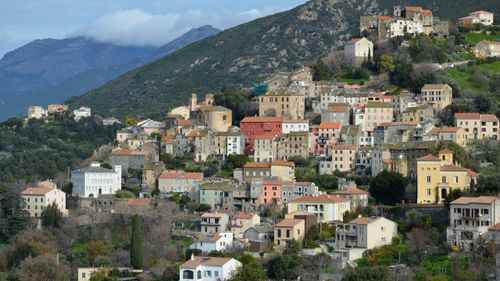
Èze is a hilltop medieval village with views across the Mediterranean.
The elevation is part of its appeal, but it also means visitors should expect steep streets and stairs.
Suggested time: 2 hours.
For travelers interested in panoramic views, photography, gardens, and historic village streets, Èze is a particularly rewarding stop.
Monaco and Monte-Carlo
Continue into the Principality of Monaco.
A first visit can include the old town, Prince’s Palace area, harbor, and Monte-Carlo district.
The Nice–Monaco TER connection takes approximately 20 minutes on average, according to SNCF’s current regional timetable information.
Suggested time: 3–4 hours.
Stay: Nice or Monaco.
Day 3: Antibes and Juan-les-Pins
The third day moves west along the coast.
Antibes Old Town
Antibes combines a historic walled town with a Mediterranean harbor and a strong artistic heritage.
Spend the morning walking through the old streets and exploring the waterfront.
Suggested time: 2–3 hours.
The journey from Nice to Antibes by TER takes approximately 20 minutes on average, with frequent daily services.
Port Vauban
Port Vauban is one of the major harbor areas in Antibes and offers a completely different atmosphere from the old town.
It is worth allowing time to walk along the waterfront rather than rushing directly to the next destination.
Juan-les-Pins
Continue to Juan-les-Pins for beaches and a more relaxed seaside atmosphere.
Suggested time: 1–2 hours.
Stay: Nice or Antibes.
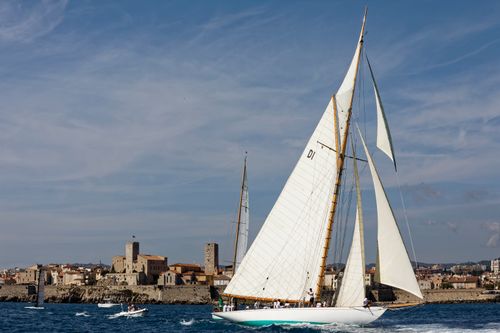
Day 4: Cannes and the Côte d’Azur Lifestyle
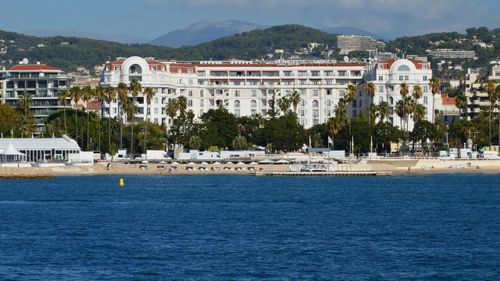
Day four focuses on Cannes, famous internationally for its film festival and luxury hospitality.
La Croisette
Walk along La Croisette, where the Mediterranean coastline meets landmark hotels, restaurants, and boutiques.
SNCF’s current Nice–Cannes information gives an average train journey of around 35 minutes, with more than 140 round trips listed daily.
Le Suquet
Move away from the waterfront and explore Le Suquet, Cannes’ historic district.
Its elevated streets provide views across the city and harbor.
Palais des Festivals
The Palais des Festivals is closely associated with the Cannes Film Festival and is one of the city’s most recognizable landmarks.
Suggested time in Cannes: 4–6 hours.
Optional: Îles de Lérins
Travelers with more time can consider the Lérins Islands, located offshore from Cannes.
For a first-time itinerary, this works best when an additional half-day is available rather than trying to fit it between several other towns.
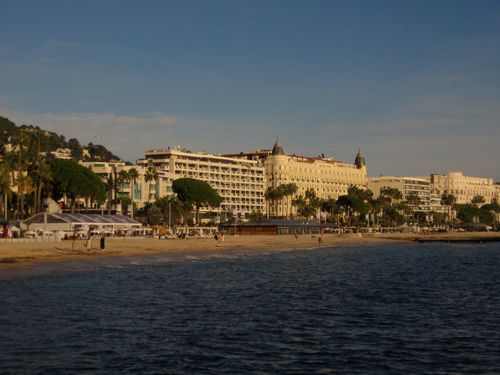
Day 5: Saint-Jean-Cap-Ferrat and Beaulieu-sur-Mer
For travelers who prefer scenery and elegant coastal experiences to busy urban sightseeing, day five can focus on the Cap-Ferrat peninsula.
The official Nice Côte d’Azur tourism office includes Saint-Jean-Cap-Ferrat and Beaulieu-sur-Mer in its current five-day coastal itinerary, alongside Nice, Villefranche-sur-Mer, Cap d’Ail, Vence, Cagnes-sur-Mer, and Èze.
Saint-Jean-Cap-Ferrat
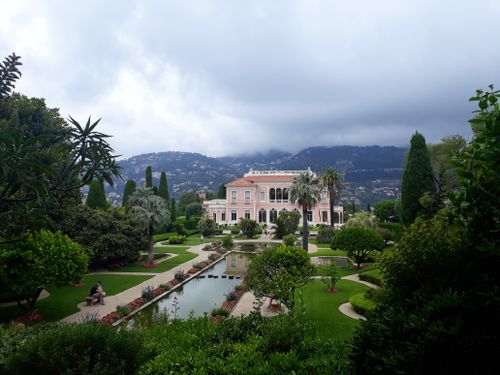
The peninsula is known for coastal paths, Mediterranean landscapes, villas, and gardens.
A notable attraction is Villa Ephrussi de Rothschild, which is highlighted in the region’s tourism information and French Riviera Pass offering.
Suggested time: 2–4 hours.
Beaulieu-sur-Mer
Beaulieu-sur-Mer offers a quieter coastal experience between Nice and Monaco.
It can be paired naturally with Cap-Ferrat for a relaxed full-day excursion.
Optional Day 6: Menton
Add Menton when you have six or seven days.
Menton sits close to the Italian border and provides a slightly different Riviera atmosphere, with colorful architecture, gardens, Mediterranean scenery, and a strong connection to the Italian side of the region.
It is useful for travelers who want to extend the itinerary east rather than simply repeating the larger resort cities.
How to Travel Around the French Riviera
The French Riviera is well suited to a combination of public transportation and private transportation.
TER Regional Trains
Regional trains are practical for major coastal towns.
Current SNCF information shows:
- Nice → Antibes: about 20 minutes
- Nice → Cannes: about 35 minutes
- Nice → Monaco: about 20 minutes
This makes rail particularly attractive for independent travelers staying in central Nice.
Private Chauffeur
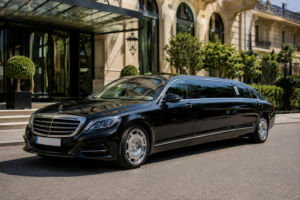
A private chauffeur offers greater flexibility when the itinerary includes hilltop villages, multiple stops, luggage, or hotel-to-hotel transportation.
For example:
Nice → Èze → Monaco → Cap d’Ail → Nice
can be handled as one coordinated sightseeing day rather than several separate transport arrangements.
Group Transportation
Families and small groups may prefer a luxury MPV or van.
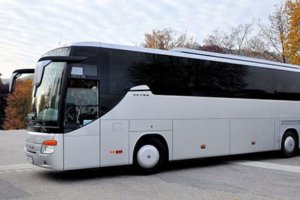
Larger groups can use a Mercedes-Benz Sprinter, executive minibus, or coach depending on passenger numbers and luggage.

Train vs Private Car on the French Riviera
| Feature | TER Train | Private Chauffeur |
|---|---|---|
| Nice–Cannes | Excellent | Flexible |
| Nice–Monaco | Excellent | Flexible |
| Hilltop Villages | Less convenient | Very convenient |
| Multiple Stops | Limited | Easy |
| Luggage | Passenger managed | Vehicle managed |
| Families | Practical | Convenient |
| Groups | Requires coordination | Easier |
| Scenic Road Trips | No | Yes |
| Rural/Coastal Detours | Limited | Flexible |
For a first-time visitor, combining both can be the most practical approach: use trains between major coastal towns and private transportation for more complex sightseeing days.
Best French Riviera Travel Itinerary for Different Travelers
For Couples
A couple can comfortably base itself in Nice and take day trips to Monaco, Èze, Antibes, and Cannes.
A slower itinerary should include an evening in Nice, a scenic coastal lunch, and time around Cap-Ferrat.
For Families
Families may benefit from fewer hotel changes.
A practical plan is:
Nice → Monaco & Èze → Antibes → Cannes → Cap-Ferrat
Private transfers become more useful when traveling with children, strollers, or large luggage.
For Luxury Travelers
Luxury itineraries can combine high-end hotels, private sightseeing, fine dining, yacht experiences, and chauffeur transportation.
Nice can serve as the main base while private vehicles are used for full-day excursions.
For Business and MICE Groups
Corporate groups usually benefit from centralized transportation planning.
A coordinated schedule can include:
Nice Airport → Hotel → Conference Venue → Client Meeting → Dinner → Hotel
For larger groups, coaches and minibuses reduce the need to coordinate multiple independent vehicles.
Best Time for a French Riviera Travel Itinerary
Spring
Spring offers pleasant conditions for sightseeing, coastal walks, and exploring towns without the peak summer atmosphere.
It is particularly attractive for travelers who want outdoor experiences without building the itinerary entirely around beach time.
Summer
Summer is the classic Riviera season, with long days and strong demand for beaches, restaurants, hotels, and coastal activities.
Travelers should reserve accommodation and transportation early, especially for popular dates.
Autumn
September and early October can be especially appealing for couples, food-focused travelers, and cultural trips.
The sea can remain attractive while sightseeing conditions are generally more comfortable than during the height of summer.
Winter
Winter is quieter and can suit travelers interested in museums, architecture, food, and relaxed city breaks.
Nice remains a year-round destination, with the tourism office promoting cultural, culinary, and indoor experiences beyond the summer season.
Cultural Experiences to Add
A strong French Riviera Travel Itinerary should include more than beaches and luxury hotels.
Explore Local Cuisine
Try Niçoise specialties and regional Mediterranean dishes in local restaurants and markets.
Visit Art Museums
Nice and the surrounding towns have strong connections with artists and modern art.
The current French Riviera Pass includes attractions such as the Matisse Museum and Chagall Museum in Nice, as well as several museums and villas around the wider Côte d’Azur.
Walk the Coastal Paths
Several parts of the Côte d’Azur offer scenic coastal walking routes.
These are especially attractive in spring and autumn.
Explore Smaller Villages
Èze, Villefranche-sur-Mer, and Saint-Jean-Cap-Ferrat can provide a slower experience than the larger resort cities.
Practical French Riviera Travel Tips
Pack comfortable footwear: Historic villages such as Èze involve steep streets and steps.
Carry sun protection: Coastal sightseeing can mean long periods outdoors.
Don’t overpack the itinerary: The Riviera is compact geographically, but traffic and sightseeing time can add up.
Book popular attractions early: Villas, museums, and major attractions can become busy during high season.
Check train schedules: TER services are frequent on many routes, but travelers should still verify departures on the travel date.
Plan luggage carefully: A large suitcase can make frequent hotel changes inconvenient.
Use the right vehicle: Passenger capacity and luggage capacity are separate considerations.
Allow extra road time: Coastal roads can become congested during busy periods.
Why Travel Professionals Choose Tour Passion
For travel agencies, DMCs, tour operators, luxury advisors, corporate planners, and MICE organizers, a French Riviera program often requires more than one type of transportation.
Tour Passion provides airport transfers, private chauffeur services, hotel transfers, chauffeur-at-disposal services, luxury vehicles, minibuses, coaches, VIP transportation, and multi-country European ground transportation.
For a Riviera program, transportation can be coordinated around airport arrivals, hotel changes, sightseeing excursions, business appointments, restaurants, and onward travel.
Examples include:
Nice Airport → Nice Hotel → Monaco → Nice
Nice → Cannes → Antibes → Nice
Nice → Monaco → Menton → Nice
The benefit for travel professionals is having transportation coordinated as part of the itinerary rather than arranging every journey separately. Professional chauffeurs, multilingual assistance, flexible itineraries, B2B support, luxury Mercedes vehicles, and 24/7 customer assistance can be particularly useful for complex programs.
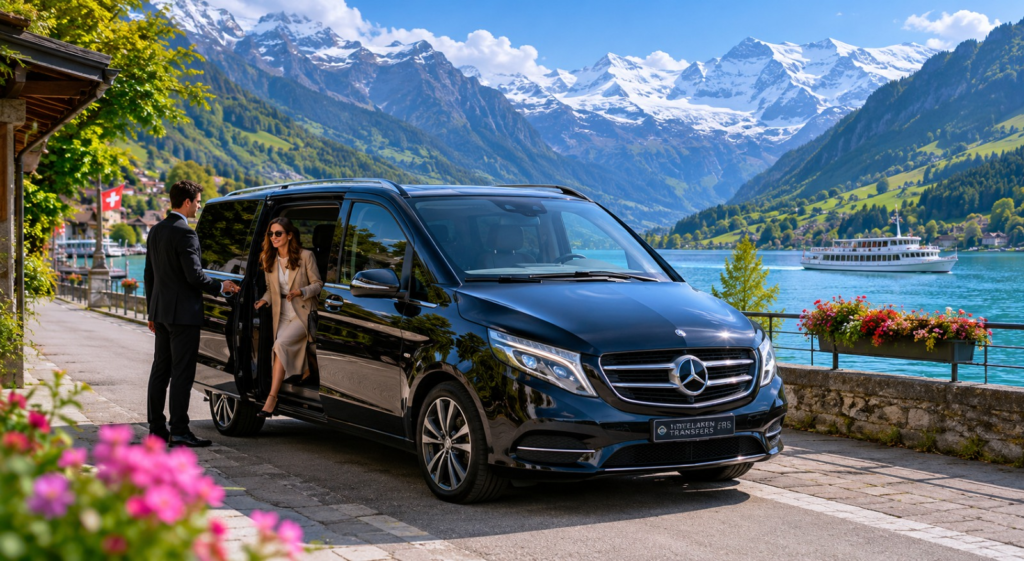
A successful French Riviera Travel Itinerary should balance the famous destinations with enough time to experience the atmosphere of the Côte d’Azur. Nice makes a practical starting point, while Èze, Monaco, Villefranche-sur-Mer, Antibes, Cannes, Saint-Jean-Cap-Ferrat, and Menton can be added according to the length and style of the trip.
Regional trains provide efficient connections between major coastal towns, while private chauffeurs are particularly useful for multi-stop sightseeing, hilltop villages, families, VIP travelers, and groups. Current SNCF schedules illustrate just how accessible many Riviera destinations are from Nice, including approximately 20 minutes to Antibes or Monaco and 35 minutes to Cannes.
Tour Passion can support a complete French Riviera program with airport transfers, chauffeur services, luxury Mercedes vehicles, minibuses, coaches, hotel transfers, and multi-city European transportation, giving travel professionals one transportation partner for complex itineraries.
Plan Your French Riviera Journey With Tour Passion
Whether you are arranging a first Riviera holiday, a luxury FIT program, a family vacation, a corporate itinerary, or a group tour, transportation can be organized around the actual journey.
Tour Passion can assist with Nice airport transfers, private chauffeurs, chauffeur-at-disposal services, luxury vehicles, minibuses, coaches, and multi-city European travel.
Request a quotation and discuss your customized French Riviera itinerary with the Tour Passion team.
Frequently Asked Questions
How many days are enough for a French Riviera Travel Itinerary?
Five days is a practical starting point for Nice, Monaco, Èze, Antibes, and Cannes. Six or seven days provide more time for Saint-Jean-Cap-Ferrat, Menton, or slower beach and cultural experiences.
Should I stay in Nice or Cannes?
Nice is often more convenient as a base because it provides strong transport connections and easy access to several coastal destinations. Cannes can be a better fit for travelers prioritizing its resort atmosphere, events, luxury hotels, and western Riviera location.
Is the French Riviera expensive?
Costs vary considerably according to accommodation, restaurants, transportation, and travel season. Travelers can manage costs by using regional trains for major coastal connections and reserving private transportation for specific excursions.
Can I visit Monaco, Èze and Nice in one day?
Yes, these destinations can be combined into one sightseeing day, particularly with a private vehicle. Using a private chauffeur also makes it easier to visit viewpoints and locations that are less convenient by train.
Is a car necessary on the French Riviera?
No. Major coastal towns are connected by regional trains, with SNCF currently listing frequent services between Nice, Antibes, Cannes, and Monaco. A private vehicle becomes more useful for hilltop villages, multiple stops, families, groups, or customized sightseeing.
What is the best base for a first French Riviera trip?
Nice is a strong base for a first trip because it combines an international airport, city attractions, beaches, hotels, restaurants, and convenient access to neighboring coastal destinations. The official tourism office also uses Nice as the starting point for several current Riviera itineraries.
Suggested For You
Multi-Country Europe Tour Package – 11 Days
Switzerland France Tour Package – 12 Days
Luxury Transfer Services in Europe
Recommended Europe Travel Services
Paris coach hire,
Paris chauffeur service,
Schiphol airport transfers,
Amsterdam airport taxi,
Paris airport transfer,
Europe coach rental,
Barcelona airport transfers,
Barcelona transportation,
Luxury Europe travel,
Interlaken transfers,
Davos transfers,
Italy chauffeur services,
Paris car rental