

EES vs ETIAS are two different European border and travel systems that travelers need to understand as Europe updates its entry procedures in 2026. Although the two names are often mentioned together, they serve different purposes. The Entry/Exit System (EES) records the entries and exits of eligible non-EU short-stay travelers, while the European Travel Information and Authorisation System (ETIAS) is a pre-travel authorisation for nationals of countries that can visit participating European countries without a visa.

For travel agents, tour operators and DMCs, understanding the distinction is important when preparing clients for European holidays, business trips and group tours. Independent travelers also need to know whether they must take action before departure. Tour Passion helps travelers and travel professionals coordinate airport transfers, private transportation, chauffeur services and multi-city European itineraries around changing travel requirements.
Quick Answer: EES vs ETIAS
EES vs ETIAS is an important distinction for Europe travelers because the two systems are not the same. EES is a border-registration system that records eligible non-EU short-stay travelers when they cross participating European external borders. ETIAS is a travel authorisation that visa-exempt travelers will need before traveling to participating European countries once the system begins operating. EES is already fully operational, while ETIAS is scheduled for the last quarter of 2026.
EES vs ETIAS: Key Facts at a Glance
| Topic | EES | ETIAS |
|---|---|---|
| Full name | Entry/Exit System | European Travel Information and Authorisation System |
| Main purpose | Records entries and exits | Pre-travel authorisation |
| Who it concerns | Eligible non-EU short-stay travelers | Nationals of visa-exempt countries |
| When it applies | At external European borders | Before travel |
| Status in 2026 | Fully operational | Not yet operational |
| 2026 timing | fully operational as of mid-2026 | Scheduled for Q4 2026 |
| Biometrics | Facial image and fingerprints for applicable travelers | No EES-style border registration |
| Application before travel | No EES application | Online ETIAS application |
| Cost | No separate EES application fee | €7 for applicants aged 18–70; free for under 18 and over 70 |
| Maximum short stay | Based on applicable entry rules, including 90/180 rules | Up to 90 days in any 180-day period for eligible travel |
| Main audience | Visa-required and visa-exempt eligible non-EU short-stay travelers | Visa-exempt travelers |
The European Commission states that EES is fully operational across the Schengen external borders, while ETIAS is scheduled to start during the last quarter of 2026.
What Is the EES?
The Entry/Exit System (EES) is a digital border-management system for eligible non-EU nationals traveling to participating European countries for short stays.
Instead of relying on traditional passport stamps, the system electronically records relevant entry and exit information. Depending on the traveler and circumstances, this includes travel-document information, facial images and fingerprints.
Who Does EES Apply To?
EES generally applies to non-EU nationals traveling for short stays who either require a short-stay visa or are visa-exempt for the participating countries. Certain travelers are excluded, including EU nationals and some people holding residence permits or long-stay visas.
This means that EES is not simply a visa system. A traveler can be subject to EES even when they do not need a visa.

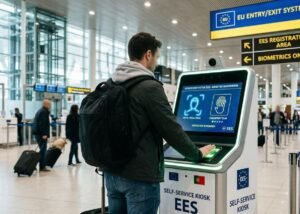
What Happens at the Border?
For travelers covered by EES, border procedures can involve:
- Passport or travel-document verification.
- Registration of personal and travel-document details.
- Facial-image capture.
- Fingerprint registration where applicable.
- Electronic recording of entry or exit.
Travelers should therefore allow enough time for border formalities, particularly when arriving at busy airports during peak travel periods.
What Is ETIAS?
The European Travel Information and Authorisation System (ETIAS) is designed for nationals of countries that can travel to participating European countries without a visa.
It is similar in concept to travel-authorisation systems used in countries such as the United States, Canada and Australia. ETIAS is not a visa.
ETIAS is currently not in operation, and the EU is not currently collecting applications. The system is scheduled to start in the last quarter of 2026, with the exact launch date to be announced officially.

How Much Will ETIAS Cost?
The ETIAS application fee is €7 for applicants aged 18 to 70. Applicants under 18 or over 70 are exempt from the fee. Applicants will complete an online application and, once authorised, can travel to the participating European countries covered by ETIAS.
EES vs ETIAS: The Biggest Difference
When comparing EES vs ETIAS, the simplest way to remember the difference is:
EES happens at the border. ETIAS happens before the trip.
EES is designed to digitally register eligible non-EU travelers crossing participating external European borders. ETIAS is designed to determine whether a visa-exempt traveler has the required travel authorisation before traveling.
EES vs ETIAS for Travelers
| Question | EES | ETIAS |
| Is it a visa? | No | No |
| Is it a travel authorisation? | No | Yes |
| Does the traveler apply online beforehand? | No | Yes |
| Does it record border crossings? | Yes | No |
| Does it involve border biometrics? | Yes, where applicable | Not in the same way as EES |
| Does it apply to visa-required travelers? | Generally yes, if eligible for EES | No |
| Does it apply to visa-exempt travelers? | Generally yes, if eligible for EES | Yes |
| Is it operational now? | Yes | No |
EES vs ETIAS for Indian Travelers
This EES vs ETIAS distinction is especially important for travelers from India.
Indian passport holders travelling to the Schengen Area generally need a valid Schengen visa. EES does not replace the visa requirement, while ETIAS applies only to visa-exempt travellers, so Indian travellers who require a visa do not need ETIAS.
However, eligible Indian short-stay travelers can be subject to EES registration when crossing an external border of a country using the system. Their travel process can therefore involve both their existing visa requirements and the newer digital border-registration procedure.

For travel agents handling India-Europe itineraries, this distinction should be explained clearly to clients before departure.
What Does EES Mean for Europe Travel in 2026?
The introduction of EES changes the way eligible non-EU travelers are processed at external European borders.
The system is now fully operational. The European Commission reported in July 2026 that EES had already registered more than 145 million entries and exits since its implementation.
Travelers should therefore prepare for digital registration rather than expecting the traditional passport-stamping process.
Practical Airport Advice
When arriving in Europe:
- Keep your passport easily accessible.
- Follow airport signs for non-EU border controls.
- Allow additional time for border procedures.
- Keep your accommodation details available.
- Carry your supporting travel documents.
- Avoid scheduling very tight onward connections.
- Follow instructions from border officers and airport staff.
This is particularly important for families, elderly travelers and groups arriving together.
What Does ETIAS Mean for Europe Travel in 2026?
ETIAS will affect travelers from visa-exempt countries rather than travelers who require a Schengen visa.
Once ETIAS launches, eligible travelers will need to obtain the travel authorisation before traveling to the European countries covered by the system. The authorisation is intended for short stays of up to 90 days within a 180-day period.
Travel professionals should therefore add ETIAS checks to their pre-departure documentation process once the system becomes operational.
Will EES and ETIAS Work Together?
EES vs ETIAS can seem confusing because the two systems address different stages of the journey.
A visa-exempt traveler may need to obtain ETIAS before departure and then be subject to EES registration at the external border when entering a participating country.
They are therefore complementary rather than competing systems.
For example:
Before departure:
Check passport validity → Check ETIAS eligibility → Obtain ETIAS when operational → Prepare travel documents
At the border:
Present passport → Complete applicable EES registration → Border verification → Enter Europe
The exact requirements depend on nationality, destination, travel purpose and immigration status.
How EES and ETIAS Affect Travel Planning
The new systems make pre-trip planning increasingly important for international travelers.
For Travel Agents
Travel agents should:
- Verify the client’s nationality.
- Check whether a visa is required.
- Determine whether ETIAS will apply once operational.
- Explain EES border procedures.
- Allow sufficient airport connection time.
- Review passport and travel-document requirements.
- Communicate changes before departure.
For Tour Operators and DMCs
Group travel requires additional coordination. Large groups can take longer to process at airports because multiple travelers may need individual document and biometric procedures.
A realistic itinerary should avoid extremely short transfer windows immediately after international arrivals.
For Corporate and MICE Travel
Business groups often have fixed meeting schedules. Airport transfers should therefore be planned with sufficient contingency time between border arrival and the first appointment.
Pre-arranged private transportation can make the ground-transfer stage more predictable after travelers clear immigration.
EES vs ETIAS: Common Mistakes to Avoid
Travelers frequently confuse EES vs ETIAS and assume they serve the same purpose.
1. Assuming EES is a visa.
It is not. EES is a border-registration system.
2. Assuming ETIAS applies to everyone.
It is intended for nationals of visa-exempt countries.
3. Applying for ETIAS too early.
As of August 2026, ETIAS is not yet operational and applications are not being collected.
4. Forgetting that EES can apply to visa holders.
EES is not limited to visa-free travelers.
5. Confusing Schengen visa rules with ETIAS.
ETIAS does not replace a visa where a visa is required.
Travel Transportation: Why Timing Matters More in 2026
Border procedures are only one part of a European itinerary. Once travelers clear immigration, they still need to reach their hotel, meeting venue or next destination.
For independent travelers, public transportation can work well for many city journeys. However, families and groups carrying several suitcases may prefer a pre-arranged private transfer.
Travel professionals may also coordinate airport pickup with a chauffeur service, ensuring that the vehicle is planned around the expected arrival and group requirements.
For multi-city itineraries, transportation can be arranged between airports, hotels, rail stations and destinations rather than leaving every transfer to the traveler.
Why Travel Professionals Choose Tour Passion
For travel agencies, DMCs, tour operators and corporate travel planners, changing European entry procedures make reliable ground transportation an important part of itinerary management.
Tour Passion provides transportation solutions designed for international travelers and professional travel partners, including:
- Airport and hotel transfers
- Professional chauffeur services
- Luxury Mercedes vehicles
- Executive transportation
- Group transportation
- Coach and minibus services
- Chauffeur at disposal
- Multi-city European transportation
- Corporate and MICE mobility
- Support for complex European itineraries
The advantage for travel professionals is having one transportation partner across multiple European destinations, rather than coordinating separate suppliers for every city.

When an itinerary includes Paris, Amsterdam, Brussels, Switzerland, Germany or other European destinations, coordinated transportation can help simplify logistics for both the agency and the traveler.
Planning a Europe Trip Under the New Border Rules
A practical 2026 planning sequence is:
- Check nationality requirements.
- Determine whether a Schengen visa is required.
- Check EES eligibility.
- For visa-exempt travelers, check ETIAS requirements once the system launches.
- Verify passport validity.
- Allow sufficient time for airport border procedures.
- Plan airport transfers in advance.
- Keep copies of important travel documents.
- Build realistic connection times into multi-city itineraries.
- Confirm the latest official requirements shortly before departure.
Travel rules can change, so travelers should always rely on official European and national government sources for their final document checks.
Understanding EES vs ETIAS is becoming an essential part of planning travel to Europe in 2026. The two systems have different purposes: EES records eligible non-EU travelers at external borders, while ETIAS will provide pre-travel authorisation for eligible visa-exempt travelers.
EES is already fully operational, while ETIAS is expected to launch in the final quarter of 2026.
For travelers, the key is preparation. For travel agents, tour operators, DMCs and corporate planners, the new procedures make accurate documentation checks and realistic transportation planning even more important.
Tour Passion can support the ground-transportation side of European travel with airport transfers, chauffeur services, luxury vehicles, group transportation, coaches and multi-city travel solutions.
Plan Your Europe Journey With Confidence
Whether you are arranging an individual European holiday, a family itinerary, corporate trip, MICE program or multi-country group tour, transportation can be coordinated around your itinerary.
Contact Tour Passion to:
- Request a customized transportation quotation
- Arrange airport and hotel transfers
- Book professional chauffeur services
- Reserve coaches and minibuses
- Coordinate multi-city European transportation
- Build reliable ground-transport solutions for group and corporate travel
Travel smart, allow realistic time for border procedures, and verify the latest official entry requirements before departure.
FAQ: EES vs ETIAS
1. What is the difference between EES and ETIAS?
EES is a digital border-registration system that records eligible non-EU short-stay travelers entering and leaving participating European countries. ETIAS is a pre-travel authorisation for eligible visa-exempt travelers.
2. Is EES already active in 2026?
Yes. The European Commission states that EES became fully operational at external Schengen border crossing points on mid-2026
3. Is ETIAS active now?
No. As of August 2026, ETIAS is not operational and applications are not being collected. The EU currently states that ETIAS is scheduled to begin in the last quarter of 2026, with the exact date to be announced.
4. Do Indian travelers need ETIAS?
Indian passport holders generally require a Schengen visa for short visits, so ETIAS is not a replacement for their visa requirement. However, eligible Indian short-stay travelers may be subject to EES registration at participating external European borders.
5. Does EES replace the Schengen visa?
No. EES does not replace the Schengen visa. A traveler who requires a visa must still meet the applicable visa requirements, while EES separately records eligible border crossings.
6. How much does ETIAS cost?
The ETIAS application fee is €7 for applicants aged 18 to 70. Applicants under 18 or over 70 are exempt from the fee.
Suggested For You
Germany Transit Visa Removed For Indians
Thailand Tourist Visa Rules 2026
Important Amsterdam Tourist Tax 2026 Changes
Monaco Yacht Show 2026 Continues to Attract Global Luxury Travelers and Industry Leaders
10 Magical Best Christmas Markets in Europe 2026
Monaco Grand Prix Travel Guide
How to Travel Between Europe’s Biggest Festivals
Paris Tourism and Mobility Initiatives