
Transportation for European Tours is one of the most important parts of planning a smooth multi-destination trip. From airport pickups and hotel transfers to sightseeing, city-to-city journeys, cruise ports, and group movements, transportation needs to work seamlessly with the rest of the itinerary.
For travel agents, tour operators, DMCs, and luxury travel advisors, arranging transportation can become increasingly complex when clients visit several European countries. A single itinerary may involve different vehicle types, road conditions, luggage requirements, hotel access restrictions, and tight sightseeing schedules.
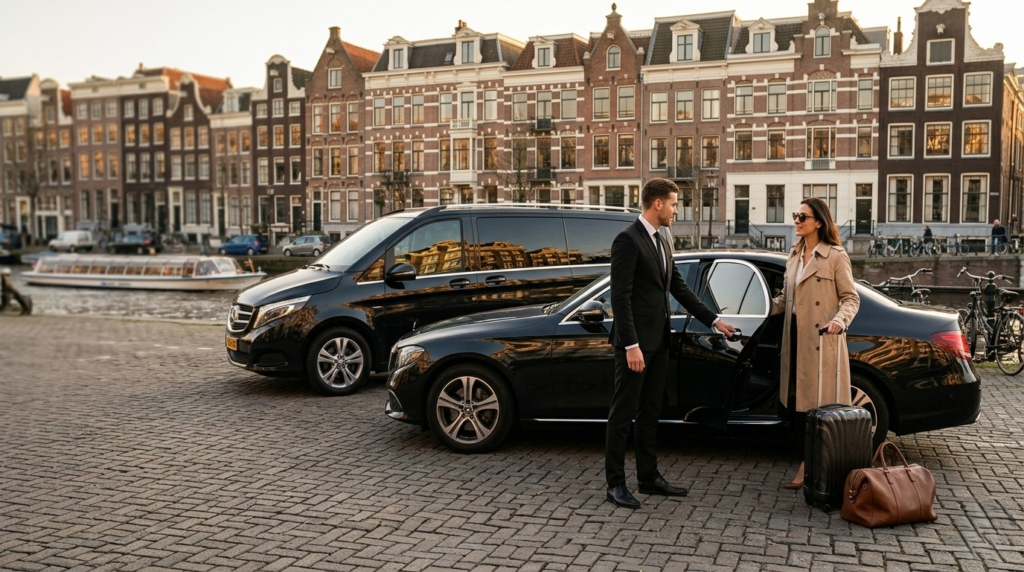
This is where a Destination Management Company (DMC) can provide valuable local coordination. Instead of treating every transfer as a separate booking, DMCs look at the complete itinerary and arrange transportation around the travelers’ schedule, group size, comfort requirements, and destination logistics.
Whether the travelers are a couple exploring Europe privately, a family taking a multi-city holiday, or a large group attending a MICE event, good transportation planning can make the journey considerably easier.
Quick Answer: How Is Transportation for European Tours Arranged?
Transportation for European Tours is usually arranged after reviewing the complete itinerary, passenger numbers, luggage, destinations, hotel locations, sightseeing plans, and travel schedules. A DMC may combine private airport transfers, chauffeur-driven vehicles, minibuses, coaches, trains, and city-to-city transportation depending on the group’s requirements and route.
Key Facts
| Travel Requirement | Recommended Transportation |
|---|---|
| Individual or couple | Executive sedan or private car |
| Small family | SUV or luxury van |
| Small private group | Mercedes-Benz V-Class or similar van |
| Medium group | Minibus |
| Large group | Coach |
| VIP travelers | Chauffeur-driven executive vehicle |
| Airport arrival | Private airport transfer |
| Multi-city journey | Private transfer or combination of train and vehicle |
| Corporate travel | Executive transportation |
| MICE group | Coordinated fleet and scheduled transfers |
| Cruise passengers | Port transfer and excursion transportation |
Key Highlights
- DMCs coordinate transportation around the complete itinerary.
- Vehicle selection depends on passengers, luggage, route, and comfort requirements.
- Airport transfers are often the first transportation service arranged.
- Private chauffeurs provide flexibility for sightseeing and city-to-city travel.
- Coaches and minibuses are practical for organized group tours.
- European train travel can be combined with private transfers.
- Seasonal traffic and local road restrictions should be considered.
- One experienced transportation partner can simplify multi-country tour operations.
What Does a DMC Do for European Tour Transportation?
A DMC does more than arrange a vehicle.
The transportation plan is usually developed around the entire destination program. This means considering where travelers arrive, where they stay, what attractions they visit, and how they move between destinations.
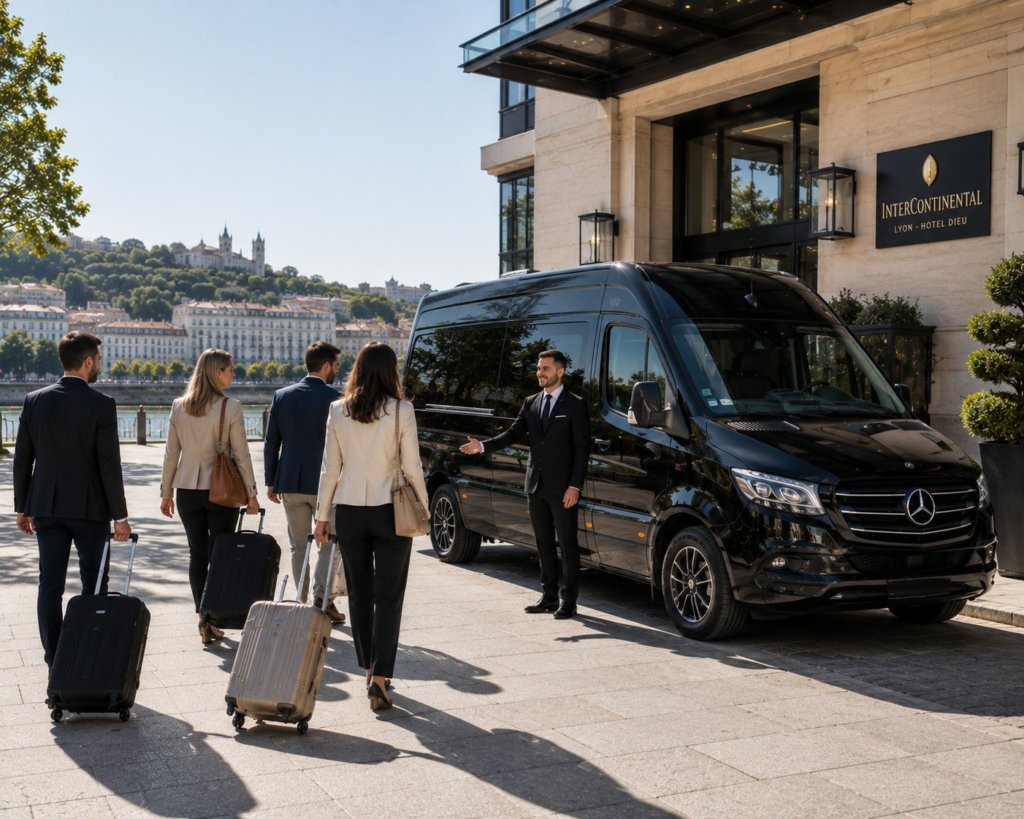
A DMC may coordinate:
- Airport transfers
- Hotel transfers
- Private sightseeing
- City-to-city transportation
- Cruise port transfers
- Restaurant transfers
- Group transportation
- Corporate transportation
- MICE movements
- Intercity connections
The goal is to make transportation fit the itinerary rather than forcing the itinerary to fit a transportation schedule.
How DMCs Arrange Transportation for European Tours
1. Reviewing the Complete Itinerary
The first step is understanding the complete journey.
A DMC typically reviews:
- Travel dates
- Arrival and departure cities
- Number of passengers
- Hotel locations
- Flight information
- Train schedules
- Cruise details
- Sightseeing plans
- Restaurant reservations
- Free-time periods
- Luggage requirements
This information helps determine where transportation is actually required.
For example, a group may need a coach for a full-day excursion but smaller vehicles when visiting a historic city with narrow streets.
2. Choosing the Right Vehicle
Vehicle selection is one of the most important parts of transportation planning.
Passenger capacity is only one consideration. Luggage, comfort, road access, journey length, and the type of travel experience also matter.
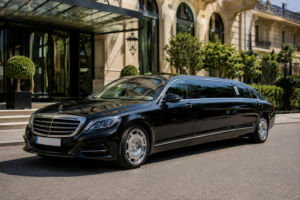
Executive Sedans
Executive sedans are suitable for:
- Individuals
- Couples
- Business travelers
- Executives
- VIP guests
They are particularly useful for airport transfers and point-to-point city transportation.
Premium SUVs
SUVs offer additional luggage capacity and comfortable seating for smaller groups.
They can work well for families or travelers carrying more luggage than would comfortably fit in a standard sedan.
Luxury Vans
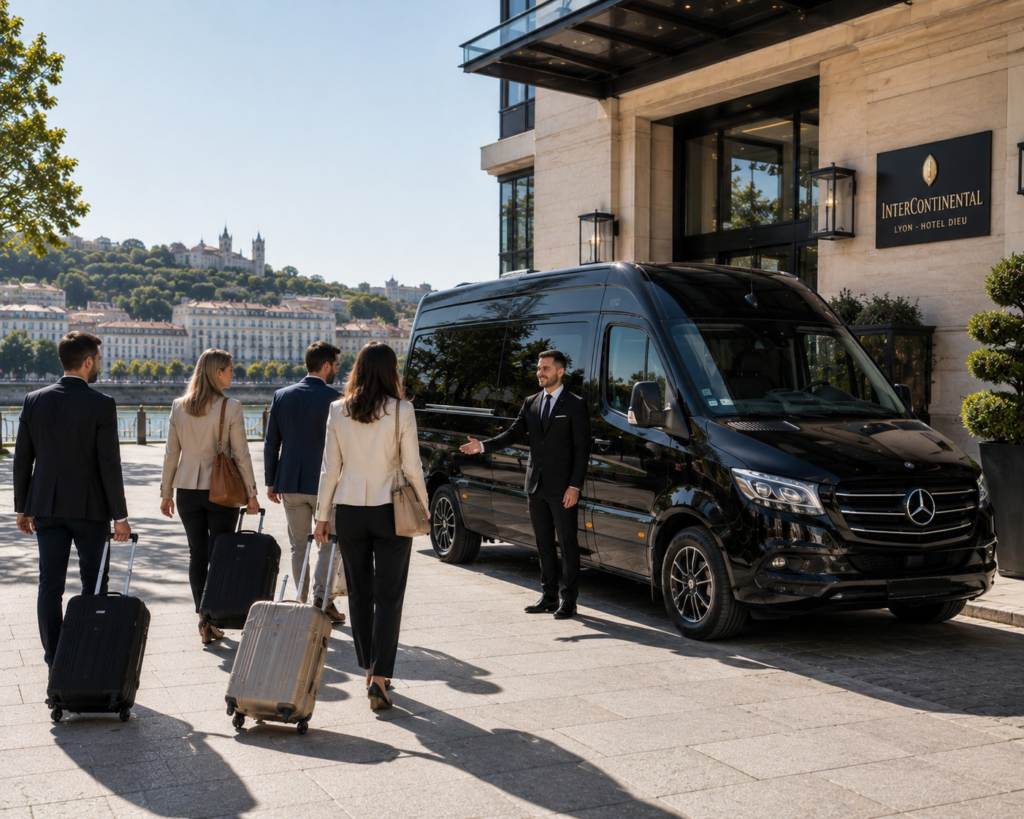
Luxury vans such as the Mercedes-Benz V-Class are popular for private families, small groups, and VIP travelers.
They provide more interior space while remaining practical for city transportation.
Minibuses
Minibuses are useful for medium-sized groups that require more capacity than a luxury van but do not need a full-size coach.
Coaches
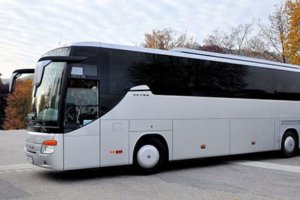
Large coaches are generally the practical choice for bigger organized groups traveling between airports, hotels, attractions, and cities.
The right vehicle should provide sufficient passenger and luggage capacity without being unnecessarily large for the route.
Airport Transfers in Europe
Airport transportation is often the first major service arranged by a DMC.
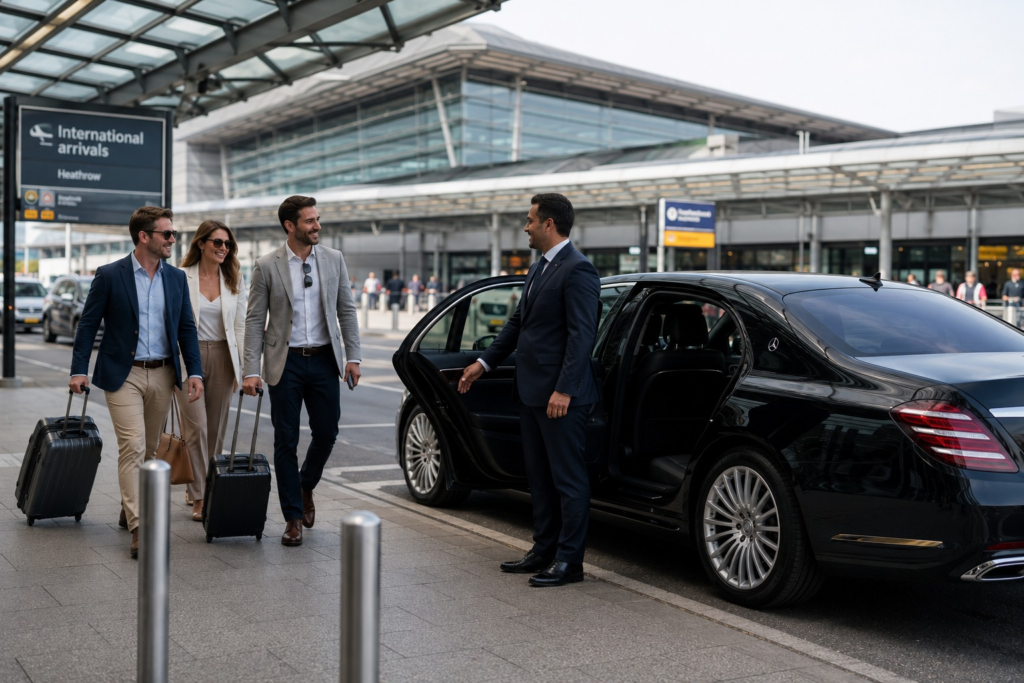
A smooth airport transfer requires accurate information such as:
- Passenger names
- Flight numbers
- Arrival time
- Terminal
- Hotel address
- Number of passengers
- Luggage requirements
- Vehicle type
- Meeting-point instructions
Why Airport Transfers Need Careful Planning
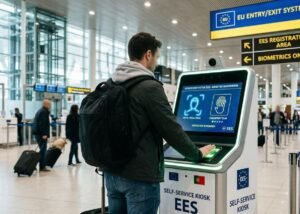
Airports can be confusing for international visitors, particularly after long-haul flights.
A pre-arranged transfer can provide a clear meeting procedure and direct transportation to the hotel.
This can be especially useful for:
- Families
- Senior travelers
- VIP guests
- First-time visitors
- Corporate groups
- Travelers with significant luggage
Private Chauffeur Services for European Tours
Private chauffeur transportation offers more flexibility than fixed public transportation schedules.
A chauffeur-driven vehicle can be useful when travelers want to combine several activities during the same day.
For example:
Hotel → Attraction → Restaurant → Second Attraction → Hotel
Instead of arranging several separate taxi journeys, the same private vehicle can remain available according to the agreed itinerary.
This can be particularly convenient for:
- Luxury travelers
- Families
- Couples
- Executives
- VIP guests
- Private groups
- Travel advisors arranging customized itineraries
City-to-City Transportation Across Europe
Multi-country travel is one of the areas where transportation planning becomes more complicated.
Popular routes can include:
Paris → Brussels → Amsterdam
A private vehicle can be useful for travelers who prefer direct hotel-to-hotel transportation.
Zurich → Lucerne → Interlaken → Milan
This route combines major Swiss destinations with northern Italy and may require a combination of private transfers and rail transportation.
Rome → Florence → Venice
Travelers may choose high-speed trains between major cities and private vehicles for airport, hotel, and sightseeing transfers.
The best solution depends on:
- Distance
- Group size
- Luggage
- Travel time
- Budget
- Comfort
- Sightseeing plans
Train Travel and Private Transportation: Using Both
DMCs do not necessarily need to choose between trains and private vehicles.
A combination can often be more practical.
For example:
Airport → Private Transfer → Hotel → High-Speed Train → Private Station Transfer → Hotel
This approach can provide the speed of European rail travel while maintaining convenient private transportation at the beginning and end of each journey.
It is particularly useful for multi-city itineraries where travelers want to avoid unnecessary driving between major urban centers.
Group Transportation for European Tours
Large groups require considerably more coordination than individual travelers.
A group of 40 passengers may require transportation for:
- Airport arrival
- Hotel check-in
- Daily sightseeing
- Restaurants
- Evening events
- Intercity travel
- Departure
A DMC must consider not only vehicle capacity but also the time required for passengers to board and leave the vehicle.
Coach Transportation
Coaches are generally suitable for larger groups.
They can provide:
- High passenger capacity
- Dedicated transportation
- Luggage storage
- Comfortable long-distance travel
- Simplified group movement
Minibus Transportation
Minibuses can be more practical for medium-sized groups or routes where a large coach may have access limitations.
Luggage Planning for European Transportation
Luggage is often overlooked when arranging transportation.
A vehicle may technically have enough seats for a group but not enough luggage space.
DMCs should consider:
- Large suitcases
- Hand luggage
- Baby equipment
- Sports equipment
- Shopping bags
- Long-stay luggage
- Special equipment
This becomes particularly important when travelers move directly from an airport to another city.
Adequate luggage capacity helps maintain passenger comfort throughout the journey.
Sightseeing Transportation and Local Access
Sightseeing transportation requires more planning than a standard airport transfer.
Historic European city centers often have:
- Narrow streets
- Pedestrian zones
- Restricted vehicle access
- Limited coach parking
- Designated passenger drop-off areas
A vehicle may not always be able to stop directly outside an attraction.
Experienced local transportation providers can help identify practical drop-off and pickup points.
This can save time and reduce unnecessary walking for families, senior travelers, and organized groups.
Cruise Port Transportation
Cruise itineraries involve strict schedules.
DMCs may coordinate:
- Airport to hotel
- Hotel to cruise port
- Cruise port to sightseeing
- Port to airport
- Private excursions
- Group transportation
Timing is particularly important because cruise passengers operate according to fixed embarkation and departure schedules.
Transportation plans should therefore include reasonable buffers for traffic and passenger movement.
Corporate and MICE Transportation
Corporate travel and MICE programs often require a highly coordinated transportation schedule.
A conference or incentive program may involve:
- Airport pickups
- Multiple hotels
- Conference venues
- Business meetings
- Restaurants
- Evening events
- VIP transportation
- Group movements
For larger programs, vehicles may operate according to a centralized movement schedule.
This allows organizers to coordinate arrivals and departures more efficiently while reducing confusion for participants.
Seasonal Considerations for European Tour Transportation
Transportation requirements can change throughout the year.
Spring
Spring generally offers comfortable sightseeing conditions, although weather can vary between northern and southern Europe.
Popular destinations may begin experiencing higher visitor numbers around major holidays.
Summer
Summer is the busiest period for many European destinations.
Travel professionals should plan for:
- Higher vehicle demand
- Heavy road traffic
- Busy airports
- Limited parking
- Crowded attractions
Advance transportation planning is particularly important for large groups.
Autumn
Autumn can offer comfortable sightseeing conditions and, depending on the destination, fewer visitors than peak summer.
It can be a good period for cultural and city-focused itineraries.
Winter
Winter transportation may require additional planning for:
- Shorter daylight hours
- Snow in mountain regions
- Winter weather
- Christmas markets
- Seasonal events
Mountain destinations may require vehicles equipped appropriately for local road conditions.
Private Transportation vs Public Transportation
Both options can work well, depending on the itinerary.
| Factor | Public Transportation | Private Transportation |
|---|---|---|
| Flexibility | Limited by schedules | High |
| Hotel-to-hotel travel | Often requires connections | Direct |
| Privacy | Shared | Private |
| Luggage handling | Traveler-managed | Vehicle-based |
| Group coordination | More complicated | Easier |
| Sightseeing stops | Limited | Flexible |
| Best suited for | Independent travelers | Families, groups and VIP travelers |
There is no universal answer.
For some city-to-city journeys, trains may be faster and more practical. For airport transfers, private vehicles can offer greater convenience. For large groups, coaches may be the most efficient option.
Common Transportation Mistakes to Avoid
Choosing a Vehicle Only by Passenger Count
A vehicle that fits the number of passengers may not have enough room for their luggage.
Ignoring Hotel Access
Some hotels are located on streets where large vehicles cannot stop directly outside.
Underestimating Traffic
Travel time can increase considerably during peak periods and major events.
Scheduling Transfers Too Closely
A delayed flight or traffic problem can affect the rest of the day’s itinerary.
Using the Same Vehicle Everywhere
Different European destinations have different road conditions and access restrictions.
Forgetting Passenger Movement Time
Large groups require additional time to board, unload, and gather at meeting points.
How DMCs Manage Last-Minute Changes
Travel plans can change unexpectedly.
Flights may be delayed. Guests may arrive earlier or later than expected. A restaurant reservation may change. Travelers may request an additional sightseeing stop.
A transportation partner therefore needs to communicate efficiently with the DMC and travel professional.
Common changes include:
- Adjusting airport pickup times
- Changing vehicle requirements
- Adding transfers
- Changing passenger numbers
- Modifying sightseeing schedules
- Arranging replacement vehicles
- Coordinating delayed arrivals
Clear communication is one of the most important elements of reliable tour transportation.
Why Travel Professionals Choose Tour Passion
For travel agencies, tour operators, DMCs, luxury travel advisors, and corporate planners, transportation is one part of a much larger European itinerary.
Tour Passion supports different travel requirements with transportation solutions including:
- Airport transfers
- Private chauffeur services
- Executive sedans
- Premium SUVs
- Luxury vans
- Mercedes-Benz V-Class vehicles
- Mercedes-Benz Sprinter vans
- Minibuses
- Coaches
- City-to-city transportation
- Group transportation
- MICE transportation
The advantage of working with an experienced European transportation partner is operational coordination.
Instead of managing every transfer independently, travel professionals can coordinate multiple transportation requirements through one partner.
For multi-country itineraries, this can simplify communication while providing travelers with consistent transportation standards across different destinations.
Transportation Checklist for Travel Professionals
Before confirming Transportation for European Tours, review the following:
- Passenger numbers
- Luggage requirements
- Flight details
- Hotel addresses
- Pickup locations
- Vehicle requirements
- Driver instructions
- Sightseeing schedule
- Road access
- Parking requirements
- Travel time
- Buffer time
- Train schedules
- Cruise schedules
- Contact information
- Cancellation conditions
- Payment arrangements
A detailed transportation checklist can help reduce avoidable problems during the tour.
Transportation for European Tours requires more than simply booking a vehicle. It involves coordinating passengers, luggage, airports, hotels, attractions, road conditions, schedules, and different types of transportation into one practical itinerary.
For independent travelers, the right transportation can make a European holiday more comfortable and convenient. For travel agents, tour operators, DMCs, and corporate planners, effective transportation management can also reduce operational complications.
Private airport transfers, chauffeur services, trains, minibuses, and coaches all have their place in European travel. The key is choosing the right option for each journey rather than using the same solution everywhere.
With careful planning, realistic travel times, suitable vehicles, and reliable local coordination, transportation can become one of the strongest parts of a well-organized European tour.
For customized airport transfers, private chauffeur services, group transportation, coaches, minibuses, and multi-country European travel arrangements, travel professionals and travelers can contact Tour Passion to discuss their itinerary and transportation requirements.
Frequently Asked Questions
What transportation options are available for European tours?
Travelers can choose from trains, taxis, private transfers, chauffeur-driven vehicles, minibuses, and coaches. The best option depends on the route, group size, luggage, budget, and itinerary.
Why do travel agents work with DMCs for transportation?
DMCs provide local knowledge and help coordinate transportation with hotels, attractions, airports, restaurants, and other itinerary components. This can make complex European tours easier to manage.
What vehicle is best for a European group tour?
The ideal vehicle depends on the number of passengers and luggage as well as the route. Small groups may use luxury vans, medium groups may use minibuses, and larger groups often require coaches.
Can private transportation be combined with European trains?
Yes. Many itineraries combine high-speed trains for long intercity journeys with private transfers between airports, stations, hotels, and attractions.
How far in advance should European transportation be booked?
Advance booking is particularly important during summer, major events, holidays, and for large groups. Early planning generally provides better vehicle availability and allows more time to coordinate complex itineraries.
Can one transportation partner manage multiple European countries?
Depending on service coverage, an experienced European transportation partner can coordinate transportation across several destinations. This can simplify communication for travel agents and tour operators managing multi-country programs.
Suggested For You
Multi-Country Europe Tour Package – 11 Days
Switzerland France Tour Package – 12 Days
Luxury Transfer Services in Europe
Recommended Europe Travel Services
Paris coach hire,
Paris chauffeur service,
Schiphol airport transfers,
Amsterdam airport taxi,
Paris airport transfer,
Europe coach rental,
Barcelona airport transfers,
Barcelona transportation,
Luxury Europe travel,
Interlaken transfers,
Davos transfers,
Italy chauffeur services,
Paris car rentals,
Grand Paris taxi services,
Paris CDG taxi,